
Legal. Ethical. Relentless.
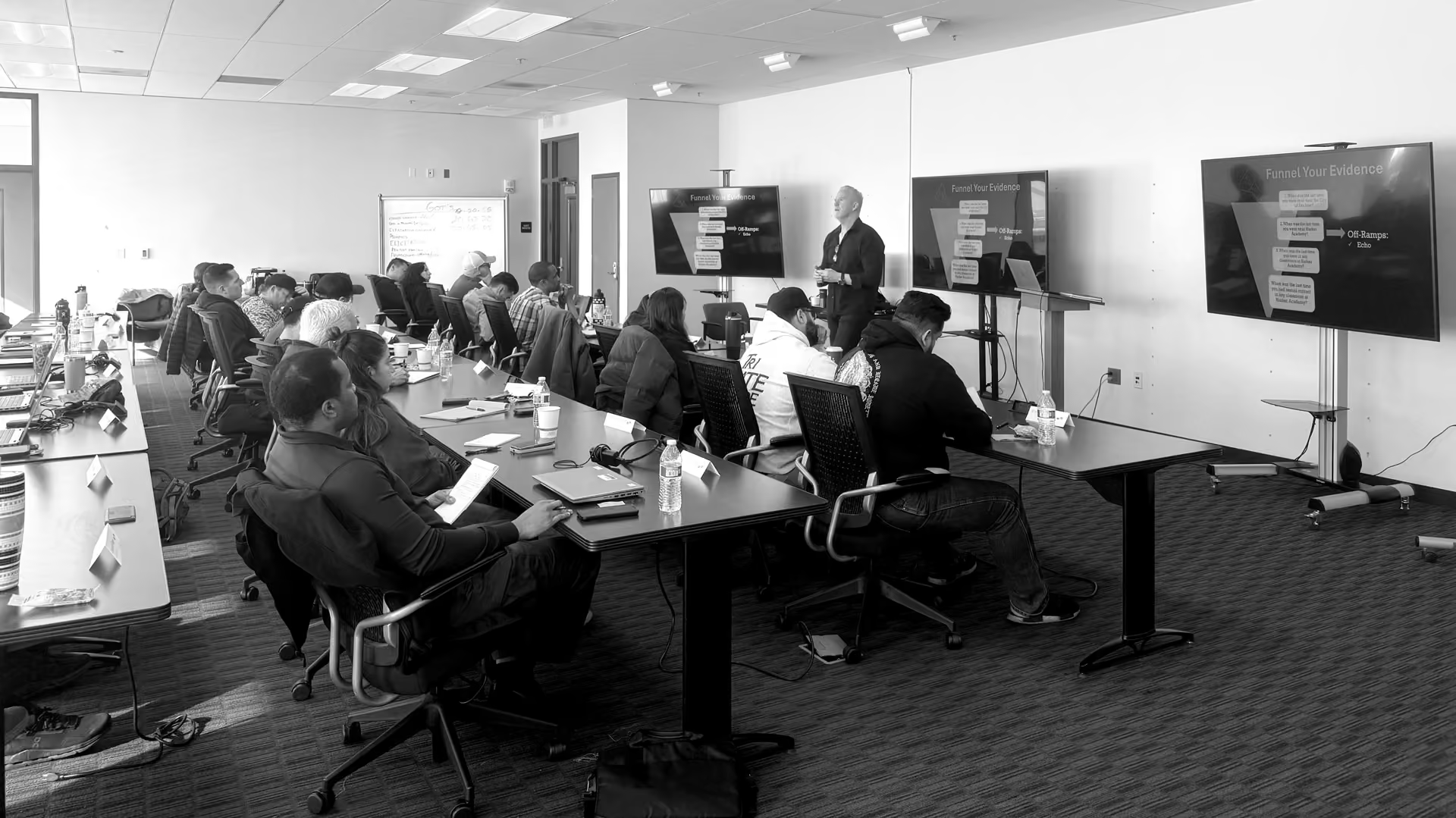

"The murder case where a man was framed and almost spent the rest of his life in prison, became the foundation for everything Third Degree teaches today: even great investigators can make devastating mistakes without the right process and framework."


Since 2004, we have focused on one thing: giving law enforcement, corrections, probation, parole, government civilian investigators and social services professionals a repeatable process for finding the truth in every case and at every level.
Our instructors solve serious crimes at rates in the 80th and 90th percentiles. That's well above the national average. They are working professionals who practice what they teach, bringing impeccable reputations, deep subject matter expertise, and the hard-won experience that only comes from running real investigations on real cases. They teach methodical case preparation and high-profile investigative technique because that's exactly what they've done.
In brief: we take what actually works in the field and make it teachable, so your newest investigator operates with the same proven framework as your most seasoned detective.
Over two decades building the standard
In-person and online, nationwide
From patrol to homicide — unified
Every year, roughly 9,000 murder victims' families are left without answers. The national homicide solve rate hovers around 50%, essentially a coin flip. That number isn't a mystery. It's the predictable result of four systemic failures.
Detectives and the Specialized Units that assist them, are forced to move from homicide to homicide without adequate time to investigate fully. The lack of sustained focus releases pressure on everyone involved in the murder.
The explosion of digital evidence — video, GPS, call records, texts, social media — has created overwhelming bottlenecks for investigative teams. Dedicated specialists are needed to convert that data into actionable intelligence, freeing lead investigators to focus on what matters most: identifying gaps, building strategy, and conducting interviews.
Victims and Witnesses in underserved communities don't trust that police can protect them if they come forward. They live in a parallel justice system where revenge murder is a feature, not a bug, and unpunished killers keep killing because they can. Hard-working people in these neighborhoods are trapped between a clunky formal justice system and the brutal reality of street justice.
Undertrained Investigators are the biggest factors for unsolved cases. In Jill Leovy's Ghettoside: A True Story of Murder in America, Detective John Skaggs solved over 80% of his assigned murders in a city that historically solved just over 50%. The difference wasn't luck. It was mindset, skillset, and process. Those things can be taught.

Our proprietary investigative and interview process — built for 21st-century policing. We can't single-handedly fix staffing, budgets, or decades of broken trust, but we can address how investigators are trained.
Simple enough for a patrol officer handling property crimes, yet fully scalable for investigators working complex serious investigations.
Built for any investigator whose job is finding the truth. We took 70 years of proven interview practices and combined them with modern, evidence-based methodology — the result is a single, easy-to-understand Advanced Interview System.
Sophisticated enough to handle adversaries who have every reason to lie, and ethical enough to never introduce bad information or produce false confessions.
Every agency has its own solve culture — the organizational engine that drives how cases get worked, crimes get solved, and victims find justice. Some agencies have a strong one. Many don't know what's holding theirs back.
From patrol officers making first contact, to Investigators building complex cases, to supervisors setting expectations, and administrators who carry the outcomes publicly. We do this through one thing: a unified, repeatable investigative and interview process that everyone on your team can follow.
We teach the personal traits and mindsets that define great investigators. Then we give them the Third Degree Blueprint to channel those traits into results.
We replace tribal knowledge with a unified method that works for everyone — from the officer fresh out of the academy to the seasoned detective working the most complex cases.
The Blueprint Investigation and Interview System isn't just for law enforcement. Every investigation shares the same foundation: gather facts, identify the gaps, interview for the truth, and conduct a 360-degree assessment. What changes is the terrain — the regulations, the subject profiles, the evidentiary standards, and the organizational culture you operate in.
We work directly with investigative organizations outside traditional law enforcement — including corporate security, HR investigations, healthcare compliance, insurance fraud, and government civilian units — to build a Blueprint adapted to your industry's specific environment.

.png)
.png)
.png)